MTPE & AI-content review
MTPE Italian: When AI Translation Needs a Human Floor (and When It Doesn't)
MTPE italian — machine translation post-editing aimed at the Italian market — is the honest middle layer between two expensive extremes: publishing raw AI output to your customers, and paying full human translation rates for text that never needed them.
The question is never can AI translate your content into Italian. It can. The question is which content can ship with a machine first draft plus a human second pass, and which cannot. Making that decision content type by content type is exactly what MTPE work is.
What MTPE is (and what it isn't)
MTPE stands for machine translation post-editing: a professional linguist reviews, corrects, and where necessary rewrites the output of a machine translation engine before it ships. The discipline has a real standard behind it — ISO 18587, which defines requirements for post-editing work — and two working tiers the industry has converged on: light and full post-editing.
In practice, light post-editing means the reviewer fixes what misinforms: wrong numbers, broken negations, mistranslated terms. The machine's sentence shapes largely stay. Full post-editing means the reviewer rewrites toward native quality — register, rhythm, word order, the works. Same engine, same source text, very different effort, and very different pricing.
MTPE is not "review" in the casual sense, and it is not an AI tool wearing a human name. The post-editor works against a defined error taxonomy and a glossary, and the output carries a declared quality level. When we deliver post-edited Italian, we say so. Passing MTPE off as full human translation is a line we do not cross — your buyer may not tell the difference today, but when they do, it is your brand that pays.
When raw AI translation is enough on its own
Some content genuinely does not need a human floor. Knowing which is most of the ROI:
- Internal documentation — engineers reading for information, not for prose. A nearly-correct draft saves hours; the residual errors cost seconds.
- Changelogs and release notes — repetitive, templated, low emotional stakes.
- Gisting — your team needs to know what an Italian document says, not to publish it.
- First-pass triage — reading machine output to decide what deserves full translation at all.
The rule of thumb is blunt: the lower the cost of a single error, the less post-editing you need. Nobody has ever lost a customer because a release note sounded mechanical.
When the human floor is non-negotiable
Customer-facing is the bright line. The moment a text speaks in your brand's voice to a stranger, raw machine output becomes a loan you repay with interest:
- Amazon listings and A+ content — buyers skim; a wrong register or a metric-unit slip reads as "imported, unsupported".
- Legal, safety, and compliance text — where an error is a liability, not a typo.
- UI strings and email flows — character limits and missing context break machine output in ways only a human catches.
- Brand and marketing copy — the entire point is sounding like someone; machines sound like everyone.
One more case hides in plain sight: review replies and support macros. High volume, real-time pressure, permanent record. Post-editing scales there; full translation usually does not.
Light or full: choosing the tier
Once you have decided a text needs a human pass, the tier decision is mechanical:
- Light — the reader wants the information and the machine got most of it right. Fix what misinforms; ship the rest.
- Full — the reader judges you by the prose: listings, landing pages, anything with your name on it.
If you hesitate, take the cheaper tier and test it on real readers. The gap between the two tiers is where post-editing budgets quietly double — choose with evidence, not anxiety.
What MTPE italian looks like in practice
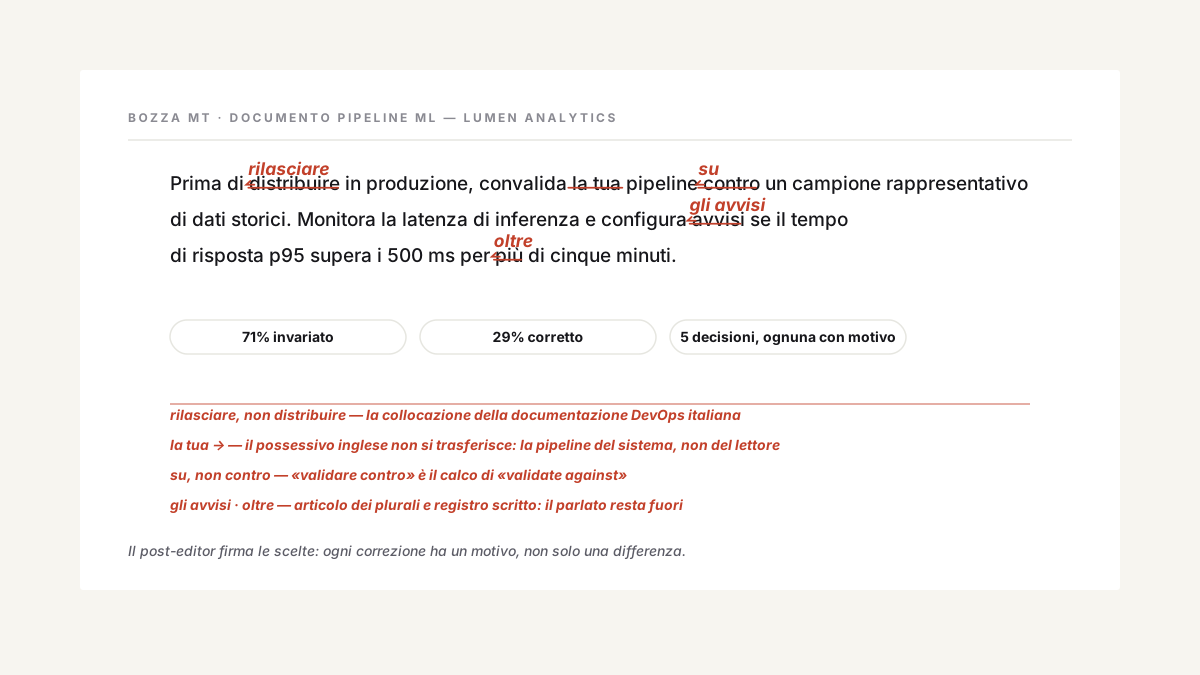
Our post-editing runs as a two-pass pipeline. First pass: the post-editor works segment by segment against a four-part error taxonomy — accuracy, terminology, register, fluency — correcting the machine output in place. Second pass: a different linguist reads the result cold, hunting for what the first pass approved out of familiarity.
Every non-obvious choice goes into a decision log: false friends ("actually" is not "attualmente", "eventually" is not "eventualmente"), glossary calls, register decisions. You see what changed, why, and what we flagged for your team. The MTPE sample shows the whole thing on a real document — source, raw machine output, post-edited text, decision log side by side.
The same discipline runs through our document room, where the decision log is the deliverable's institutional memory: every choice traceable, nothing lost between revisions.
The economics, honestly
No invented numbers here — they would not survive contact with your actual content mix. What we can state plainly: post-editing costs less than full translation because the machine carries part of the load, and light post-editing costs less than full. The real multiplier between your cheapest and most expensive content type is usually how much of it needs the full tier, not the per-word rate.
A short test settles the tier question better than any article. Send a representative batch, we post-edit a sample at both tiers, and you see the difference on your own words — with every correction annotated.
Where to start
If you already run content through machine translation, the fastest win is a light post-editing pilot on your next batch: we mark every fix, and you see exactly where the engine stumbles in Italian. If you are setting MTPE italian up as a capability, start with the samples and the decision logs behind them.
Start here: get a quote for a post-editing pilot — fixed price, tier recommendation included. Or [write to the studio](mailto:[email protected]) with a sample of your content, and we will tell you, content type by content type, where the human floor pays for itself.
Shipping a product into Italy?
Send the file — fixed quote, real deadline, Italian that reads native.
[email protected]